Canadian genealogy for Americans & EasyGenie's new Canadian charts
Ian LamontLast year, Finding Your Roots featured Canadian-American singer Alanis Morissette. What turned up was quite incredible, including the account of an ancestor who survived a whitewater rafting trip over a waterfall, as well as French-Canadian ancestry going back to the early 1600s.
The show’s researchers made it look easy. But as anyone who has Canadian ancestry knows, digging up facts and stories can be difficult. Over many years of searching for records relating to my Canadian great-grandmother and her family, I have only verified a single Canadian document, shown below. Most of my evidence comes from American records that listed a Canadian origin, such as death certificates and censuses.

Americans and Canadians share a long and sometimes troubled history. Thousands of French-speaking Acadians were driven from Eastern Canada in the mid-1700s, many of them settling in Louisiana. Canada was later a place of refuge for loyalists, escaped slaves, and displaced tribes during and after the American Revolution.
As transportation links developed between the two countries in peacetime, cross-border migration grew, prompted by job opportunities, higher education, and love. Bonds are especially strong among Native American groups and First Nations peoples with members on both sides of the border, such as the Akwesasne Mohawk community in New York, Ontario, and Quebec.

Canadian genealogy records can be similar or very different
For Americans, documentation found north of the border will seem familiar, albeit with a local twist:
- Civil registration started in the provinces in the late 1800s and early 1900s and roughly parallels the rollout of US vital records at the state level.
- Federal censuses started in 1871, but were based on voting districts rather than towns.
- National archives are maintained by Library and Archives Canada, or LAC.
At other times, Canadian genealogy is an alternate universe. Records may be in French or other languages. Strange documents pop up in the archives, such as the Montreal lease agreements in French I stumbled upon when testing FamilySearch’s updated full-text search features.
As in the United States, Canada experienced shifts in political control over the centuries. Borders have moved. Names have changed. Some municipalities have consolidated multiple times, even recently. For instance, Toronto swallowed up Etobicoke, Scarborough and other suburbs in the late 1990s.
This can make locating records tricky, as I found when attempting to locate ancestors from a hamlet known as Lundy’s Lane (later part of Drummondville, and finally absorbed into Niagara Falls, Ontario, in 1904).
For free records, start with FamilySearch and LAC. If you have ancestors from Ontario, the OnLand portal contains historical land registration records. I also recommend the video introduction to Canadian research on the RootsTech website.
EasyGenie charts in Canada
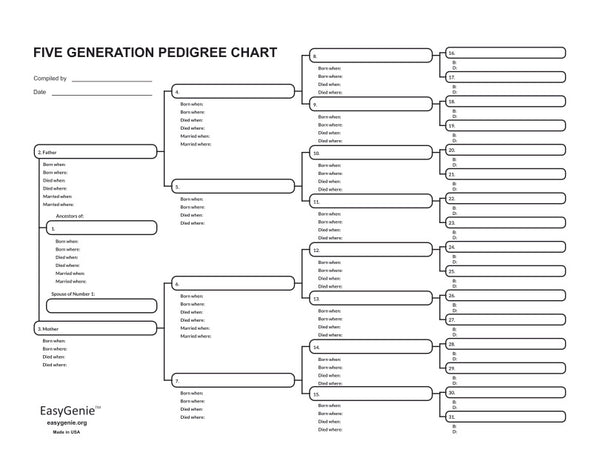
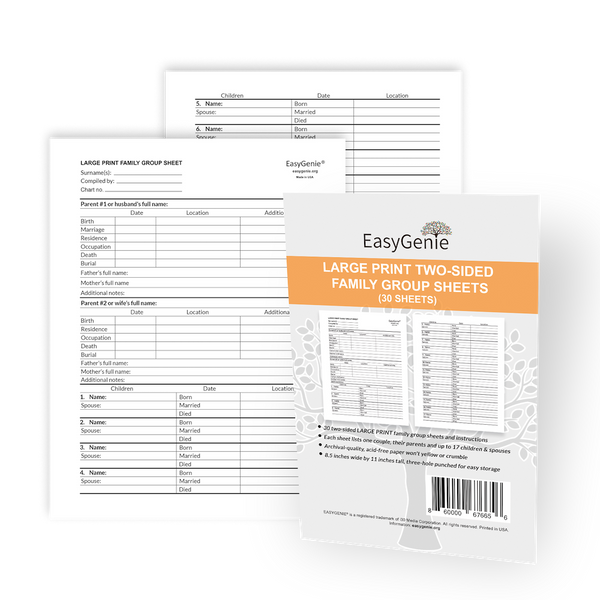
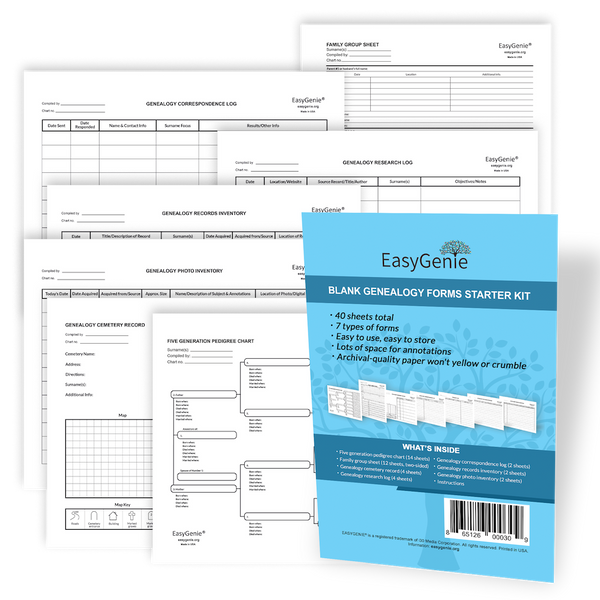
One last note about Canada: EasyGenie recently expanded manufacturing to Canada, to better serve our Canadian customers who want charts that are printed in Canada.
In September, I met with a family-owned print shop in Ontario, and our 8-generation pedigree charts and large print family group sheets are now available on Amazon Canada. We hope that this cross-border cooperation will expand in the years to come!