The hard reality of developing new genealogy charts: the Amazon factor
Ian Lamont
At the New England Regional Genealogical Consortium in New Hampshire last year, I sold the last copy of the Blended Family Genealogy Kit (circled in red, above). It won’t ever be printed again, although customers can still purchase the fillable PDF version.
Nicole and I had high hopes for the printed version of the kit, which we released in 2021. Many customers told us they wanted charts that could reflect different types of family situations, such as divorce, remarriage, same-sex parents, and kinship care. We worked with a graphic designer and our printer to come up with the Blended Family kit, which included two types of charts.
Few people actually purchased them. It took four years to sell through our initial order from the printer.
We’re having a similar issue with the Adopted Family Genealogy Kit. Clearly there was a need for charts that could record both adoptive and biological family, and people who actually tried them liked what they saw. There’s nothing else like it in the market.
Not enough people actually bought them. We have a half-dozen kits left, but we won’t be ordering more from our printer – a minimum print run costs thousands of dollars, and we can’t afford to sit on inventory that takes years to sell through.

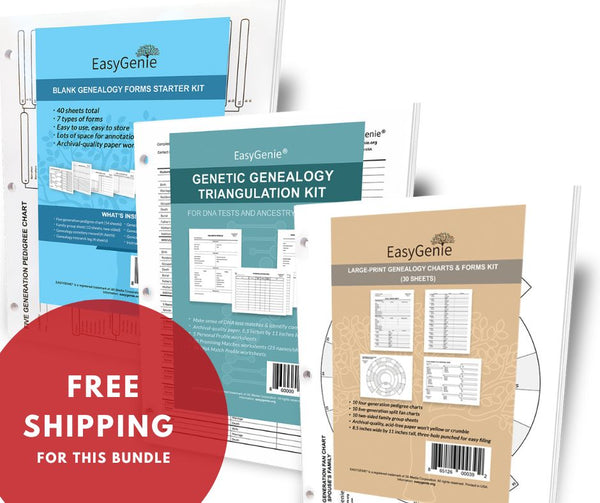
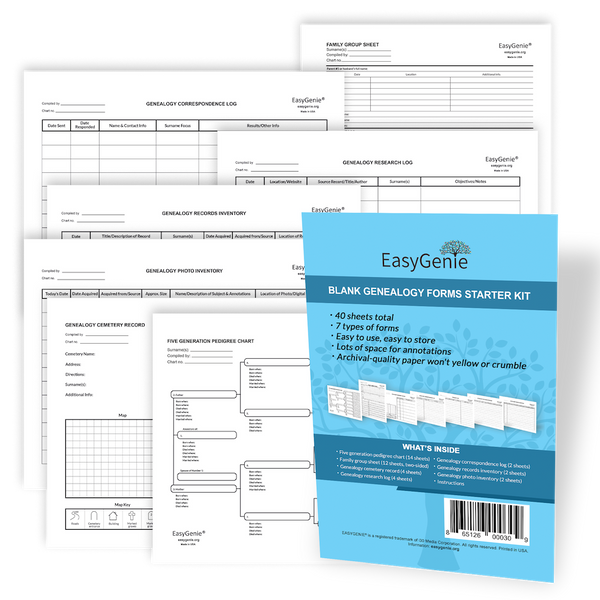
Not all product launches are failures. For instance, the Genealogy Stories Kit has been a consistent seller since its 2021 launch. All of the general-purpose large print charts have done very well for more than 5 years, including at NERGC.
But the experience with the Blended Family kit and other sets has made us far more cautious about launching new products.
Competitors and the Amazon factor
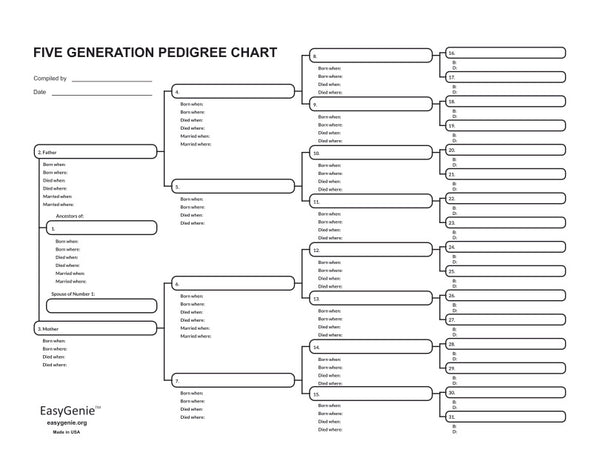
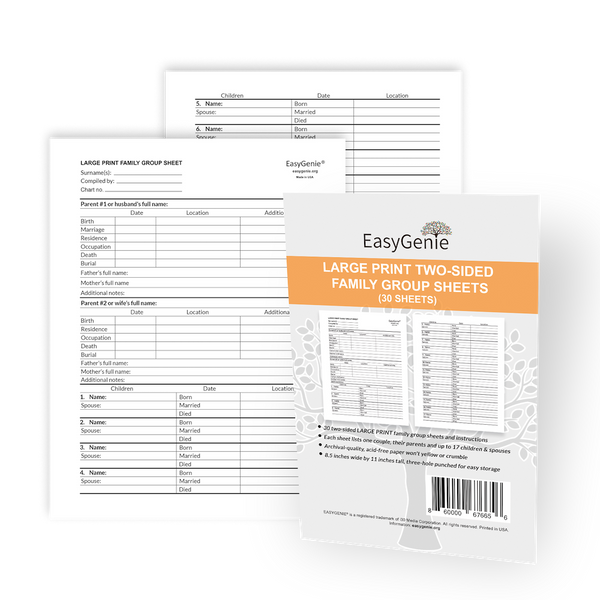
Sometimes, we have no choice but to launch a new product. This fall, we’re launching a special bulk packet of 50 family group sheets. We’re starting on Amazon, with a price point below $20. We manufacture in the United States. So, after Amazon takes its cut, there is hardly any margin.

Why do this, considering we already sell various types of family group sheets?
It’s because of the competition. Specifically, the competition on Amazon, where the majority of our sales take place. We much prefer sales on our own website (EasyGenie.org) which Nicole fulfills, but many customers are locked into Amazon Prime.
Recently, several overseas vendors ripped off our family group sheet design. These “brands” have no genealogy expertise. They sell anything Americans might buy for the home … sweatbands, beautician supplies, and even a surfboard scraper!
They saw customers loved our sheets, copied everything in our design except for the logo, and then began selling them at a cut-rate price on Amazon, using a lower grade of paper. Our sales dropped by half.
Readers who have run businesses know that a 50% drop in sales on a major sales channel is a big problem.
There’s not much we can do. Amazon doesn't care — it exploits small American businesses, relentlessly targeting us with excessive fees and restrictions. The law doesn’t offer protections, either. Designs that follow a common structure such as a calendar or genealogy chart can’t be copyrighted.
The only way we can compete with overseas competitors on price is to reduce quality. We never wanted to do this, but we have no choice. For the first time ever, EasyGenie is offering charts that are not printed on acid-free paper.
The charts in the bulk kit are suitable for worksheets, and are sold in packs of 50. (If you want higher-quality acid-free family group sheets, we still sell those, including our pro-grade set).
Cancelling development projects
The Amazon sales drop has other repercussions. We are more careful with investments in niche products.

We’ve mentioned the medical genogram project in the past, and even created some draft sheets over the summer which were shown to testers (see example, above). The results were underwhelming, with many testers having difficulty figuring out how to use the sheets. It doesn’t makes sense to place an order for 200 kits (the minimum print run), although a PDF version may still be possible.
To cope with the new realities of our business, Nicole and I have sharply cut our already small salaries, and reduced expenditures on advertising and back-office costs.
It should go without saying that purchasing directly from small businesses this holiday season (instead of via Amazon) helps immensely. We have special products such as fillable genealogy PDFs that will never be sold on Amazon, and have some special product drops planned on EasyGenie.org later this month.
And, regardless of whether you shop on EasyGenie.org or Amazon, we hope that you can share your honest reviews of the charts online or in person. Real reviews and recommendations help raise awareness.

Lastly, we are doubling down in one area: events. While craft fairs and genealogy conferences take time, require travel, and don’t scale, we truly believe in-person events are the best way to understand our customers and participate in the larger genealogy community.
If we don’t see you in 2026, we will keep you posted from this newsletter. You can also follow us on the EasyGenie YouTube, Facebook, and Instagram channels.